
Most people who lose a limb have one question on their mind within days of surgery: “When can I walk again?” The answer depends on several things, but for most South African amputees, the journey from amputation to walking on a prosthetic leg takes roughly three months when things go smoothly.
That timeline only tells part of the story, though. Getting a prosthetic leg involves wound healing, limb shaping, fitting, rehabilitation, and ongoing adjustments that continue for years. This guide walks you through every stage so you know exactly what to expect, what to ask, and how to prepare.
Not every amputee is an automatic candidate for a prosthetic leg. Before moving forward, your surgeon and prosthetist will assess several factors: how much healthy soft tissue remains to cushion the bone, the condition of your skin, the range of motion in the remaining joint, the health of your other leg, and your overall physical condition.
Your activity level before the amputation plays a significant role too. Someone who was physically active and lost a limb in an accident will generally adapt faster than someone who was largely sedentary and lost a limb due to diabetes or peripheral vascular disease (PVD), which remains the most common reason for amputation in South Africa. Other causes include infection, malignancy, congenital limb deficiencies, and failed reconstruction after previous surgeries.
The level of amputation matters as well. Lower limb amputations are classified by where the limb is removed, and each level affects prosthetic options differently:
The majority of lower limb prosthetic fittings in South Africa are transtibial or transfemoral. People born with a congenital limb difference may also benefit from a prosthesis, and the fitting process is adapted to their specific anatomy. Your amputation level, combined with your mobility goals and overall health, determines which prosthetic components your care team will recommend.
None of this rules out a prosthesis. It simply means the decision should be made together with your medical team based on your specific situation and goals.
Understanding the stages removes a lot of the anxiety. Here is what the process looks like from the operating table to your first steps.
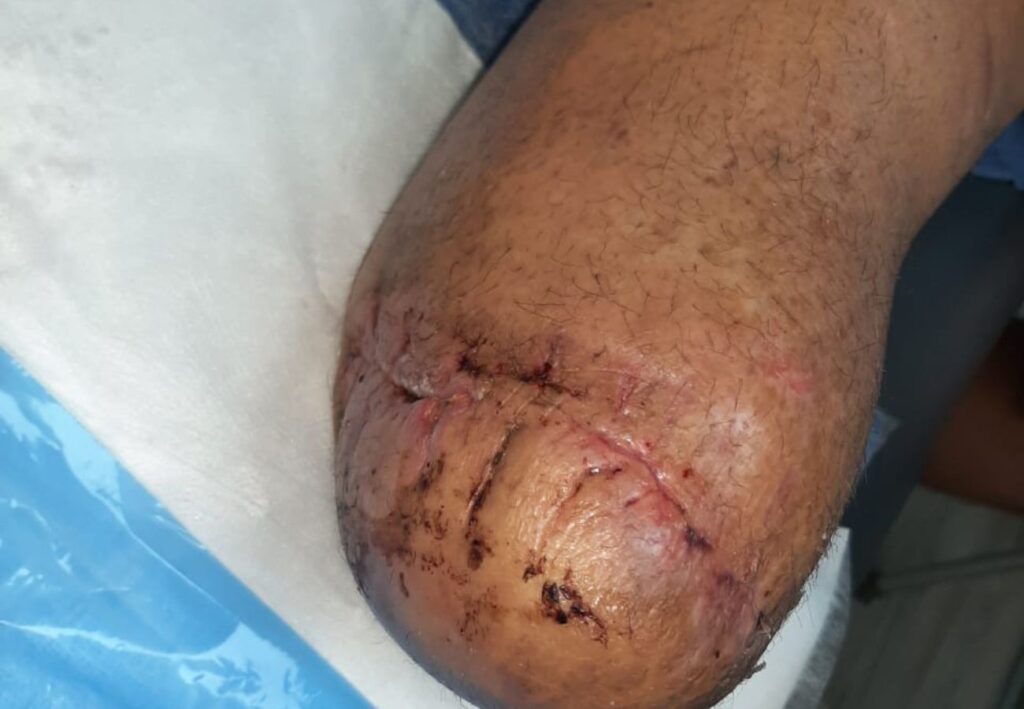
The first priority after surgery is healing. Immediate post-operative compression therapy, often using rigid dressings, helps control swelling from the start. Pain management is handled through prescribed medication, and gentle elevation of the limb with pillows encourages fluid drainage. One important detail: avoid keeping the knee in a continually bent position during elevation, as this can lead to contractures that make prosthetic fitting harder later.
Phantom limb sensations, the feeling that the amputated limb is still present, are common during this period. Your rehab team can prescribe exercises and therapies to manage them.
The wound is considered healed once all sutures or staples have been removed and the site is clean and dry. Scabs may still be present. Your surgeon gives the final go-ahead before the next phase begins.
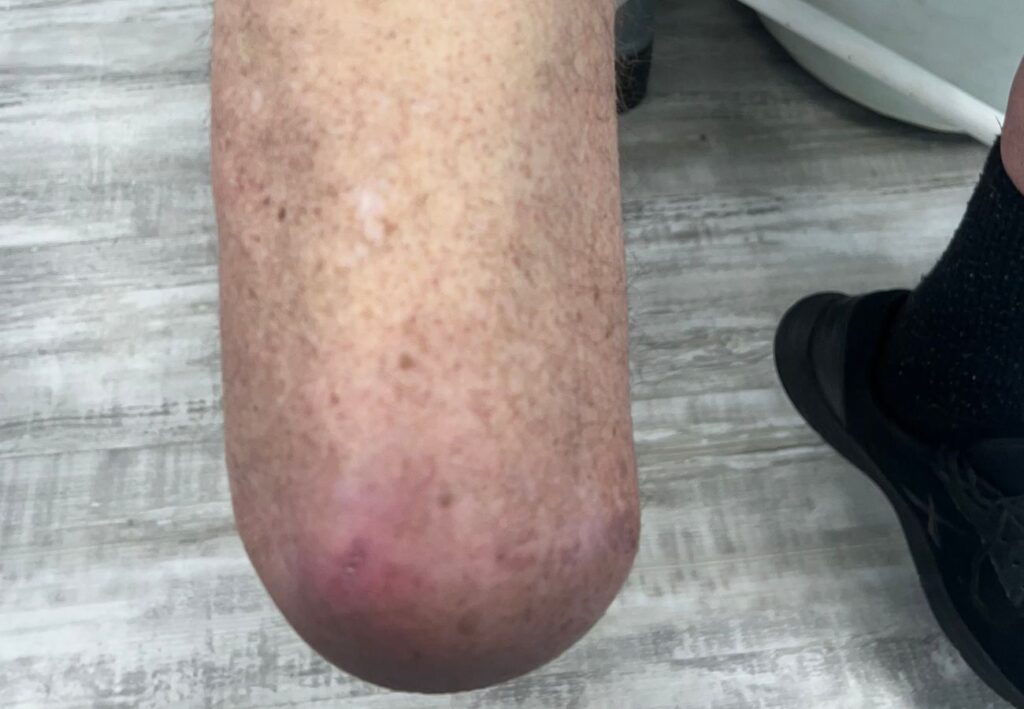
This is one of the most important, and most overlooked, stages of the entire process. Before a prosthetic socket can be fitted, the residual limb (or residuum) needs to be shaped through a process called coning. The goal is to reduce post-surgical swelling, encourage fluid drainage, and mould the limb into a conical or cylindrical form that fits securely inside a socket.
Some centres use rigid dressings or begin fitting immediately after surgery. A more conservative approach, and one that minimises secondary complications, is to only start coning once the wound has fully healed and all stitches or staples have been removed. Your surgeon will have the final say on when coning can begin.
“Coning is one of the most important phases after amputation. It prepares your limb for a comfortable and functional prosthesis, and rushing it compromises everything that follows.”- Dr Beckerleg
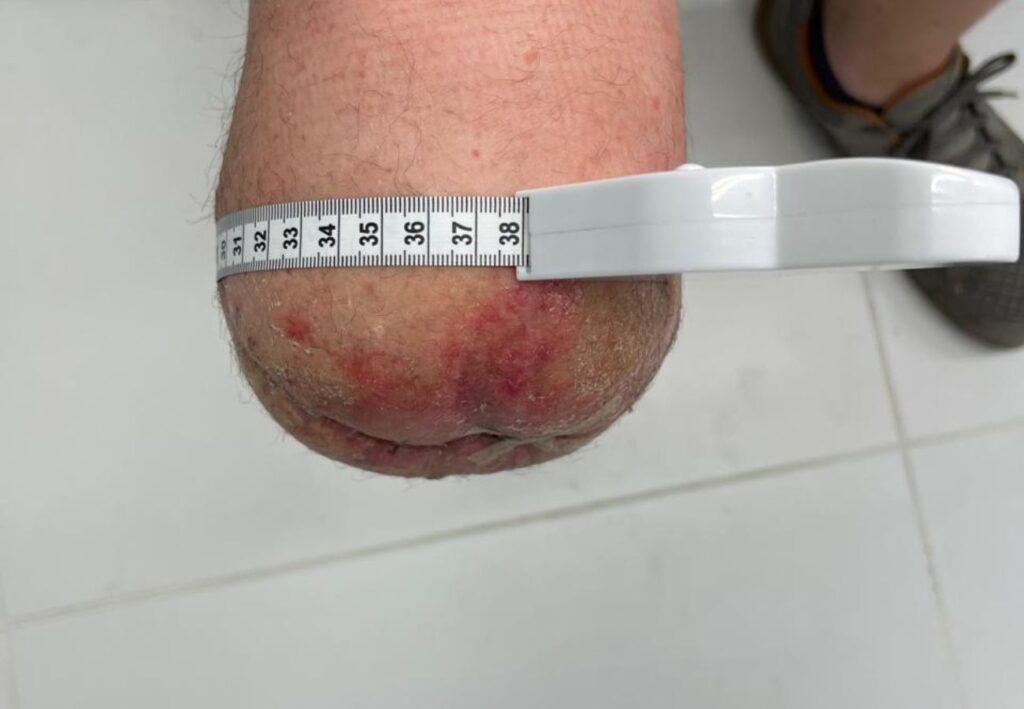
Several techniques are used, often in combination to maintain consistent pressure on the residuum around the clock:
Short stretch bandaging (not elastic long stretch bandages) involves wrapping the limb in a figure-of-eight pattern, starting at the end of the residuum and working diagonally upwards, overlapping each layer by about half the bandage width. Tension is firmer at the bottom and gentler as you move up, which encourages fluid to drain away from the tip. Short stretch bandaging can be safely maintained for a full 24-hour period. You and a caregiver will be taught how to reapply bandages at home.
Post-operative silicone sleeves are graduated compression liners worn for increasing periods each day. A typical starting schedule is 2 hours in the morning and 2 hours in the afternoon, increasing by 1 to 2 hours per session each day based on your tolerance and your prosthetist’s prescription. When the sleeve is not being worn, short stretch bandages, shrinker socks, or compression tubing continue so the residuum maintains consistent pressure around the clock.
Compression tubing is another option. The tubing is pulled over the residuum to above the knee, and an optional twist can be made at the bottom with a second layer applied over the tip for double compression. Correct sizing is important here, as tubing that is too tight or too loose will not shape the limb properly.
Shrinker socks are off-the-shelf compression garments available in different sizes. They are especially useful for above-knee amputees who find bandaging techniques more difficult. As the limb shrinks, your prosthetist will size you into a smaller shrinker to keep the fit snug.
Rushing through this phase is a mistake. If coning is cut short, the residuum will still be swollen when measurements are taken, and the socket will not fit properly once the limb settles into its true shape.
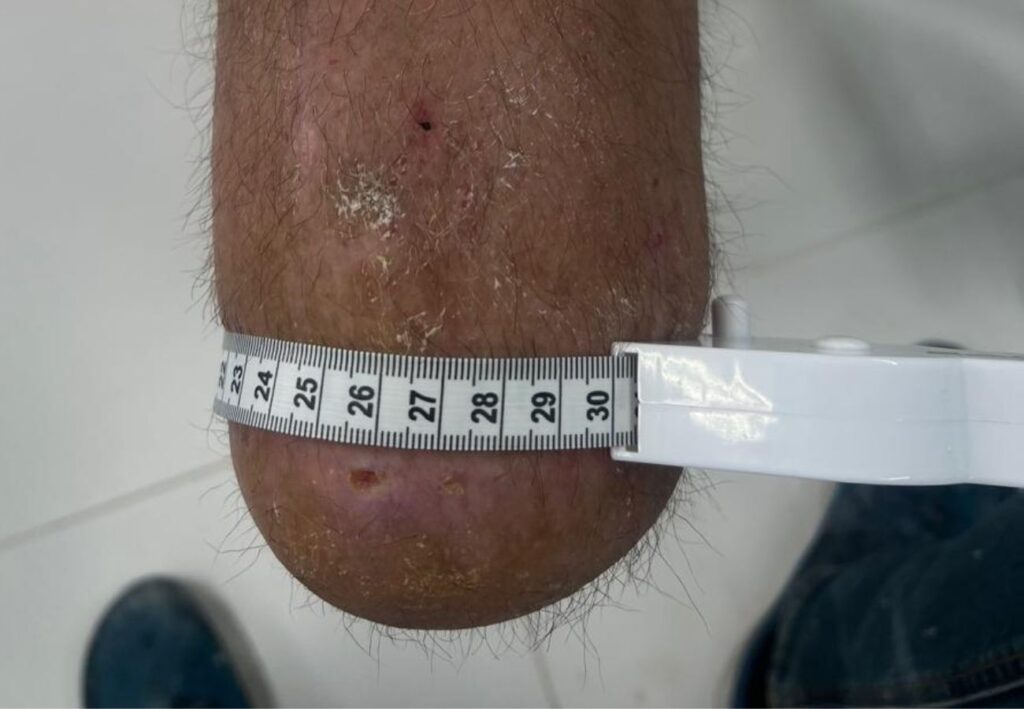
While coning is underway, desensitisation exercises prepare the residual limb to tolerate the pressure of a prosthetic socket. This starts with light stroking and circular massage, then progresses to tapping and gentle percussion. These exercises are typically done three to four times a day. Over time, the limb becomes accustomed to the forces it will experience during walking.
Once the limb has stabilised in shape and volume, your prosthetist takes precise measurements and creates a mould of your residual limb, which is used to build a test socket. This diagnostic fitting checks alignment, comfort, and weight distribution before the definitive prosthesis is built.
Most patients receive a preparatory (temporary) prosthesis within roughly three months of surgery. This first leg uses a basic socket and components designed for initial gait training while the residual limb continues to change shape. After six to twelve months, once the limb has settled into a more permanent form, you transition to a definitive prosthesis built with more responsive components. A definitive prosthesis is designed to last three to five years.
A prosthetic leg is a system of components that work together. Understanding them helps you have better conversations with your prosthetist.
| Component | What It Does | Key Consideration |
|---|---|---|
| Socket | Custom-moulded interface that fits over your residual limb | The most critical component. A poor fit causes pain and skin breakdown. A good fit should feel secure without discomfort. |
| Suspension system | Keeps the prosthesis attached (sleeve suction, vacuum, or pin-lock) | Each type has trade-offs in security, ease of use, and comfort. |
| Knee unit (above-knee only) | Controls stability and swing during walking | Options range from basic mechanical knees to microprocessor knees with sensors. |
| Prosthetic foot | Provides ground contact and propulsion | Designs vary from solid ankle feet for basic mobility to dynamic response feet for active users. |
| Cosmesis (optional) | Lifelike silicone or PVC cover that mimics a natural leg | Not essential for function, but improves confidence for many patients. |
Your prosthetist selects and configures these components based on your amputation level, activity goals, and physical condition. This is a relationship you will likely have for life, so finding someone you trust and feel comfortable with matters.
Getting a prosthetic leg fitted is only part of the equation. Learning to use it requires structured rehabilitation with physical therapists, occupational therapists, and rehabilitation physicians. How long that takes depends on the level of amputation, your fitness, and your goals.
Gait training usually starts in a controlled setting, parallel bars or a walking frame, and progresses to assistive devices before moving to independent walking if your condition allows. You will also practise stairs, slopes, uneven ground, and how to recover safely from a fall.
A gradual wearing schedule helps you build tolerance without damaging the skin. A common approach looks like this: one hour on day one, two hours on day two, four hours on day three, eight hours on day four, and a full day by day five. Inspect your residual limb at every break for redness, irritation, or pressure marks. Do not use the prosthesis independently until your therapist clears you.
Rehab is not only about the prosthetic leg. Strengthening your arms, core, and your remaining leg is equally important.
“While prosthetic technology is always advancing, nothing can replicate a healthy leg. Protecting the one you have is just as important as learning to use your prosthesis.”
Keeping your remaining limb strong and injury-free is one of the best things you can do for your long-term mobility.
Getting a prosthetic leg is not a solo process. You will work with a team of specialists, each responsible for a different part of your recovery. Knowing who does what helps you ask the right questions at the right time.
Your prosthetist is the person who designs, builds, and adjusts your prosthetic device. They take the measurements, select the components, fit the socket, and handle ongoing adjustments as your body changes. This is typically the longest professional relationship you will have after amputation.
A physical therapist leads your gait training and strengthening exercises. They teach you how to walk with your new limb, build the muscles that support it, and develop movement patterns that protect your joints and remaining leg. Your physical therapist will also clear you for independent use of the prosthesis.
An occupational therapist focuses on daily activities, helping you adapt tasks like dressing, bathing, driving, and working to your changed body. Their goal is to get you functioning independently in your own environment.
A rehabilitation physician (physical medicine and rehabilitation specialist) oversees the broader rehabilitation plan, coordinates between team members, and manages any medical complications that arise during recovery.
Depending on your situation, your healthcare team may also include your surgeon, a wound care nurse, a social worker, biokineticist and a psychologist. The more these professionals work closely together, the smoother your rehabilitation process will be.
Knowing what to expect makes problems easier to manage before they escalate.
Cost is one of the biggest concerns for South African amputees, and it should not be something you face without clear information.
Prosthetic limbs generally fall under Prescribed Minimum Benefits (PMBs), which means medical aid schemes are legally required to cover them regardless of your plan option. Schemes like Discovery, GEMS, Bonitas, and Medihelp all have processes for prosthetic approvals, though the specific components covered and the pre-authorisation steps vary between providers.
If you lost a limb in a motor vehicle accident, the Road Accident Fund (RAF) may cover the cost. Workplace injuries may be covered under the Compensation for Occupational Injuries and Diseases Act (COIDA). For patients without insurance, several NGOs and charitable organisations in South Africa assist with prosthetic funding.
Working with a prosthetist who understands these funding pathways and handles pre-authorisations, appeals, and claims paperwork on your behalf makes a real difference. It means you can focus on recovery instead of fighting with administrators.
A prosthetic leg is not a once-off purchase. Your body changes, your goals shift, and the technology keeps improving.
In the first year, socket adjustments and refits are routine as the residual limb stabilises. After that, most prosthetic legs are replaced every three to five years. Signs it may be time for a reassessment include new pain, a feeling of instability, or the sense that you have outgrown what your current prosthesis can handle.
You may feel you have outgrown or moved beyond your prosthetic components functionabilities. One can always upgrade components to ones with higher functional capabilities or add components such as microprocessor knees.
It uses sensors and computer chips to adjust your gait in real time, offering different modes for flat ground, stairs, and inclines. Activity-specific prostheses for running, cycling, swimming, and showering let amputees return to sports and activities that were once off the table. Osseointegration, a procedure where a titanium implant is inserted directly into the bone so the new prosthesis attaches without a socket, is an emerging option for suitable candidates that have been proven to not be able to wear a standard prosthetic socket.
Your prosthetist is your long-term partner through all of this. Regular check-ins ensure your prosthesis keeps pace with your life.
The physical side of getting a prosthetic leg gets most of the attention, but the emotional side matters just as much. Limb loss affects your identity, your confidence, and your sense of what is possible. That is normal, and it does not mean something is wrong with you.
Many amputees describe the first few months as a rollercoaster. There are days when putting on your prosthesis and walking to the kitchen feels like a victory, and days when frustration takes over. Both are part of the process. What helps is having people around you who understand, whether that is family, a psychologist, or other amputees who have been through it.
Support groups, both in-person and online, can make a real difference. Connecting with other people living with limb loss gives you access to practical advice that no clinical team can offer: which trousers work best, how to handle stares in public, what to do when your prosthesis rubs on a long car trip. South Africa has several amputee community groups and peer support networks, and your prosthetist or rehab team can point you in the right direction.
As your confidence grows and your prosthetic fitting stabilises, daily activities start to feel normal again. Most amputees return to driving, working, cooking, shopping, and socialising. Many return to an active lifestyle that includes gym, hiking, cycling, or swimming. The goal is not just to walk again. It is to get back to living on your own terms.
Without complications, most patients receive a preparatory prosthesis within about three months. The exact timeline depends on wound healing, the coning process, and your overall health.
Shrinker socks are most critical during the coning phase, but many amputees continue wearing them at night or whenever the prosthesis is off. They help maintain limb shape, and some patients find they reduce phantom sensations.
Prosthetics generally fall under Prescribed Minimum Benefits, meaning medical aids are legally required to cover them. Pre-authorisation is needed, and the components covered can vary by scheme. Ask your prosthetist to walk you through the process for your specific provider.
A definitive prosthesis typically lasts one to five years. Liners, socks, and suspension components may need replacing more frequently depending on your activity level.
Yes. Many amputees return to running, cycling, swimming, hiking, and team sports. Specialised sport prostheses are available, and your prosthetist can recommend the right setup for your activity.
A well-fitted prosthetic should not cause pain, though it will feel unfamiliar at first. Some discomfort during the initial adjustment period is normal. Persistent pain is a sign the fit needs attention, not something to push through.
